

By Nana Khadija
In the sun-drenched fields of Dutse, Ramatu Dahiru stands as a solitary figure—the only woman farming in an area traditionally dominated by men.
While she represents the resilience of Nigeria’s agricultural heartland, her story is a stark reminder of the “21% gap” identified by the Central Bank of Nigeria (CBN).

Despite national strategies aimed at a 95% inclusion rate, women like Ramatu are still fighting for the most basic of rights: the right to their own land.
The Land and the Law
Ramatu’s neighbor encroached on her farmland, a move she attributes directly to her gender. “He felt because I am a woman, there is nothing I can do,” she shared.
This struggle is reflected in the CBN Diagnostic Findings on Special Segments, which highlight that land disputes and the lack of legal representation remain massive barriers to formalizing the economic power of women.
While the National Policy on Gender in Agriculture condemns such violence, enforcement remains a shadow.
The CBN’s National Financial Inclusion Strategy (NFIS 3.0) emphasizes that “Financial Inclusion is achieved when adult Nigerians have easy access to products… without complex requirements.” For Ramatu, the “complex requirement” isn’t just paperwork—it’s the social permission to own her soil.
The “Donkey” Bottleneck: Infrastructure as Exclusion
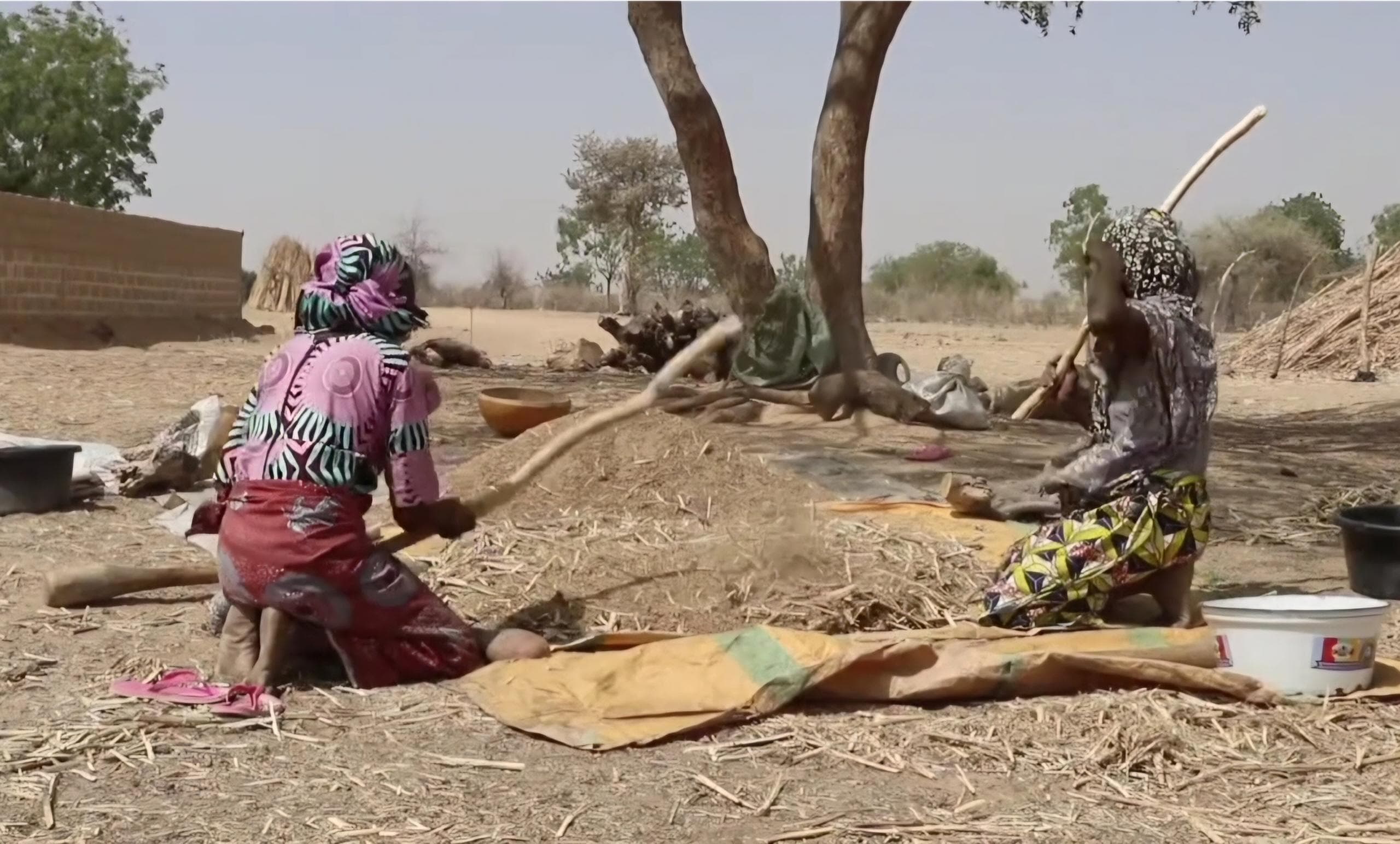
Even when the harvest is successful, the battle shifts to the market. In Kafin Gana, Sadiya Adamu spends six hours a day pounding grain by hand. Without motorized decorticators, her productivity is capped. Meanwhile, in Kiyawa, Halima Baso is forced to sell her crops immediately—often at a loss—because she lacks storage silos.
“To move produce, we rely on donkeys.
It is time-consuming and the quality drops,” says Hajiya Hadiza Giwa, the Jigawa State Coordinator of SWOFON.
This infrastructure deficit is precisely what the CBN’s Leaders Roundtable on Financial Inclusion (June 2024) sought to address.
The Roundtable identified that “Broadband penetration” and “robust financial infrastructure” are the only ways to leapfrog these physical barriers.
If Sadiya had access to the credit mentioned in the Women Entrepreneurs Finance (We-Fi) Code, she could replace her mortar and pestle with machinery, potentially tripling her weekly income from N10,000 to N50,000.
The Identity of a Farmer
A significant hurdle mentioned in the CBN Roadmap for Special Segments is the “Identity Gap.” Many women in rural Jigawa lack the formal documentation to open high-tier bank accounts.
This is where the “Tiered KYC” (Know Your Customer) policy becomes a lifeline. It allows women to open accounts with minimal documentation, ensuring that even if they are “absentee owners” or displaced by local conflicts, their money remains secure and accessible.
According to Dr. Saifullahi Umar, Technical Adviser to the Governor, Jigawa is fighting back through the NG-CARES initiative, which has provided assets to nearly 40,000 women and youth. Yet, as agricultural experts like Umar Gambo point out, cultural norms often discourage women from mingling in male-dominated markets.
The Path Forward: From Participation to Power
To move the needle from 74% inclusion to the 95% target, the story of Jigawa’s women must change.
The CBN’s Women’s Financial Inclusion Dashboard (Launched Nov 2024) is designed to track exactly these disparities, providing data that can no longer be ignored.
True inclusion is not just about a bank account; it is about the safety of the farm, the speed of the transport, and the fairness of the price.
As the CBN Governor Olayemi Cardoso noted in his 2024 remarks, “Together, we can create a financially inclusive country where every citizen can thrive.” For the women of Jigawa, that thrive-point begins when the policy in Abuja finally protects the plow in Dutse.
Data References:
* CBN: National Financial Inclusion Strategy (NFIS 3.0)
* CBN: Diagnostic Study on Financial Inclusion of Special Segments (June 2024)
* EFInA: Access to Financial Services in Nigeria 2023 Survey


